
Why Your Feet Cut Loose on Overhangs and How to Stop It
Key takeaways
- Most of the fix is practice on steep terrain, with your feet staying on the wall.
- Pull with your toes and heels. That keeps your hips in, so your feet stop being passengers.
- Some trunk strength helps, but people still debate how much off-wall core training carries over to climbing.
- Slow, easy steep climbing with a strict feet-on rule beats grinding at your limit with sloppy feet.
The short answer
Mostly, it's practice on steep terrain. Keep your feet on the wall on purpose, and use them to pull. Some trunk strength helps on top of that.
The rest of this article covers how I'd go about it, and where I think core training fits.
Why your feet cut loose on overhangs
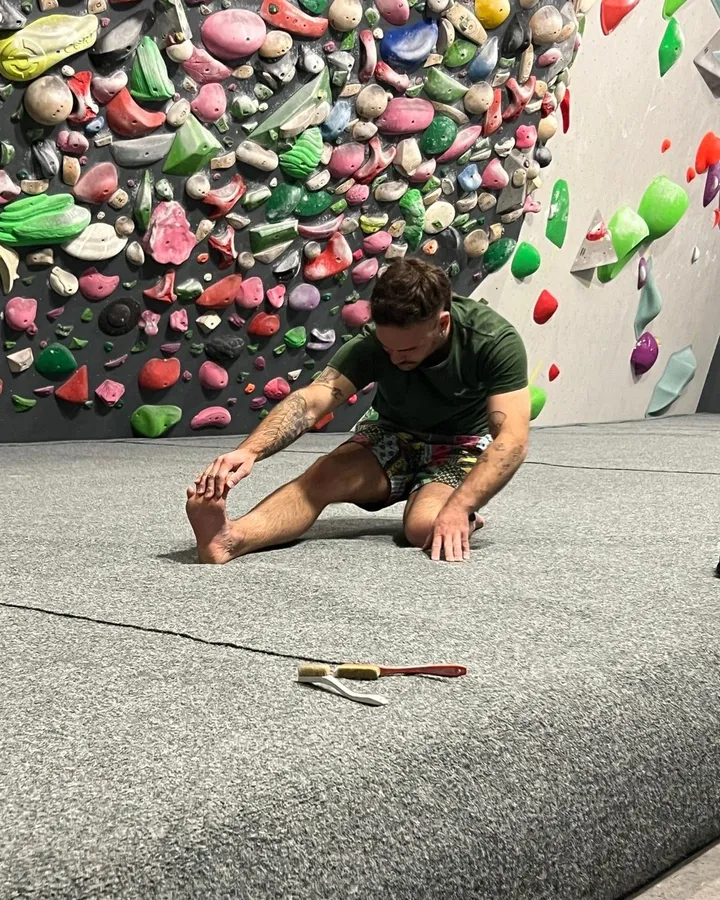
On a slab or a vertical wall, your feet carry a good chunk of your weight. On an overhang, your arms do that job. Your feet are there to keep your hips close to the wall. When your hips drift out, your feet pop off, and your arms take everything.
People often call this a core problem, and sometimes it is. I think it's a habit problem too. When the wall is steep and the holds are far apart, you focus on your hands because that's where the effort is. Your feet get left behind, they swing, and you can't get them back.
So two things are going on. You might not have the trunk strength to hold your body in a line. You might also not have spent enough time on steep rock or plastic with your feet on your mind. The second one is much easier to fix.
Keep your feet on, on purpose
The most useful thing you can do is climb steep problems with one strict rule. Both feet stay on the wall for every move. If one cuts, you start again or you don't count it. It feels harsh for about a session, then it feels normal.
Pick problems well below your limit. This isn't a day for projecting. You want to think about your feet without falling off every second move. On a board like a Kilter, Moon or Tension that's easy to set up, since you can choose a steep angle and easy problems.
Slow climbing feels a bit silly. Do it anyway. You're building a habit, and a habit takes heaps of repeats at a pace where you can actually notice what your feet are doing.
Pull with your toes and heels
On steep terrain your feet can do more than push. They can pull. A toe hook pulls your body in with the top of your foot. A heel hook pulls with the back of your foot, and you drag your heel toward your backside. Both stop your hips swinging out, and that swing is what cuts your feet in the first place.
Try it on an easy steep problem. On each move, think about pulling the wall toward you with your feet. You'll feel your legs working and your hips staying put. You'll also notice how often your feet were just sitting there.
It helps to practise hooks as their own skill. Find a few steep problems with a good heel or toe spot and repeat them until you stop thinking about it. Once you trust a hook, you'll use it without deciding to.
Where core training fits
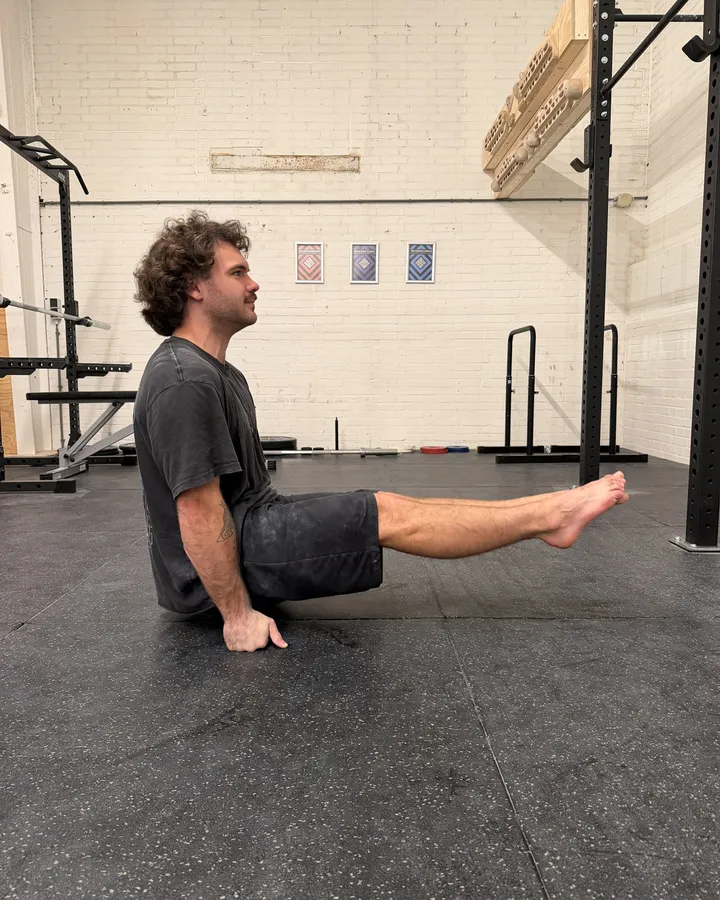
Some trunk strength helps. If your body sags when you pull, your feet will struggle to stay on. How much off-wall core training carries over to climbing is still debated, though. I don't think anyone has a clean answer, and I won't pretend I do.
My view is to do a little, keep it short, and don't let it replace climbing. A few sets of hanging knee raises or a hollow hold after a session is plenty. Your steep practice already does the most specific work, because it trains your trunk in the exact positions you need.
- Hanging knee raises, controlled and slow.
- Hollow holds, with your lower back pressed down.
Putting it into your week
Give steep feet work its own slot so it doesn't depend on luck. One session a week with the feet-on rule is a reasonable start. Warm up on easy steep problems, do your hook practice, then climb harder if you've got energy left.
If you plan your sessions in Blok Sessions, write the rule into the session itself so you don't forget it halfway through. A few weeks later, check how your feet felt. If they're staying on more often, keep going. If they're still cutting loose, slow down and make the problems easier.
FAQ
Do I need a strong core to stop my feet cutting loose?
Some trunk strength helps, but practice on steep terrain matters more. People still debate how much off-wall core training carries over to climbing.
Should I use toe hooks and heel hooks on overhangs?
Yes. Pulling with your toes and heels keeps your hips close to the wall, and that's what stops your feet swinging off.
How do I practise this on a board?
Choose easy problems at a steep angle and make a rule that both feet stay on for every move. Climb slowly and look at each foot before you move your hands.
Find out what's stopping you
Seven questions about your climbing, then a plan built from your answers. Free.
About a minute