
Coaching a climber back from a finger injury

Short answer
The physio or doctor sets the limits and the coach writes the training inside them. Get the limits in writing: which holds, which hand positions, how much load and what pain is acceptable. Keep the rest of the climber training (legs, core, shoulders, footwork, easy climbing on big holds) and bring finger load back in small steps, open hand and bigger holds before crimps. Ask about the finger before every session, and go back a step at sharper pain, swelling or pain that lasts into the next day.
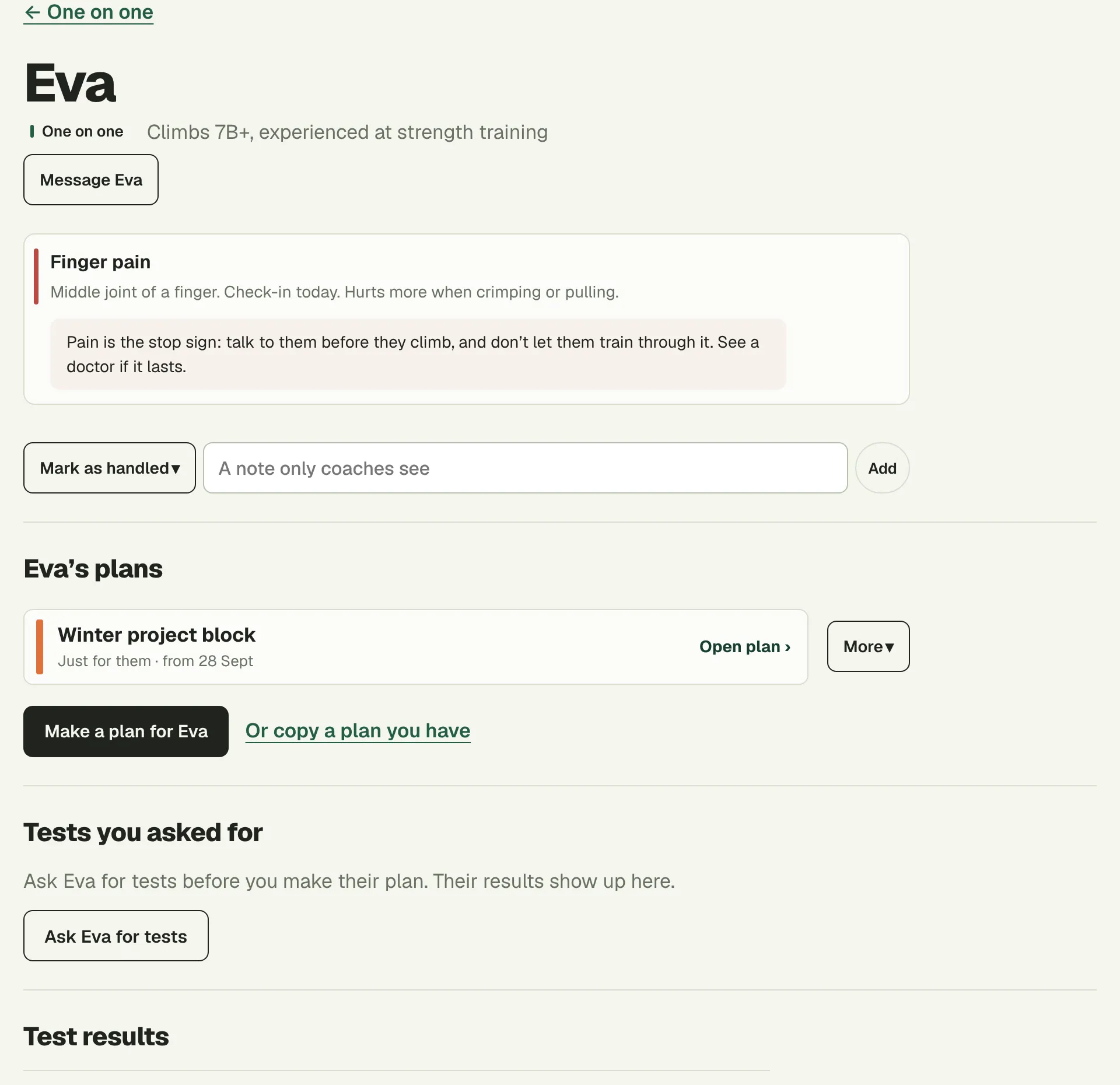
Coaching climbers? The coach area is free for up to 5 climbers: their plans, what they log and who has a sore finger, in one place.
See the coach areaThe physio leads, the coach plans
A climber coming back from a finger injury has two people helping them, and it works best when the roles are clear. The physio or doctor decides what the finger can take. The coach turns that into sessions the climber can follow, and keeps the rest of their climbing going.
Ask the climber to get the limits in writing, or join a call with the physio if they agree:
- which hand positions are allowed (open hand, half crimp, full crimp);
- which holds (jugs only, big edges, no pockets);
- whether hangs are allowed, and how much load;
- what pain is acceptable during and after, and what means stop;
- when the next check-up is.
Keep everything else training
An injured finger is a few weeks of chance to work on what usually gets skipped:
- legs, hips and core;
- shoulders and the pushing muscles that balance climbing;
- footwork and movement on big holds and easy angles;
- easy volume for endurance, if the physio allows it.
Bring finger load back in small steps
Injury risk is highest at the site of an earlier injury, so the way back is slow on purpose.
- Open hand and big holds before half crimp and small edges. The crimp loads the A2 pulley far more.
- Easy feet-on hangs before full hangs, if the physio wants hangs at all.
- One change at a time: more load, smaller holds or more sessions, not all three in one week.
- Easy climbing before limit bouldering, and board climbing last.
Ask about the finger every session
A short check-in before training is the cheapest early warning there is. Ask whether it hurts and where. Go back a step, and tell the physio, at:
- sharper pain than last time;
- swelling;
- pain that lasts into the next day;
- pain at rest.
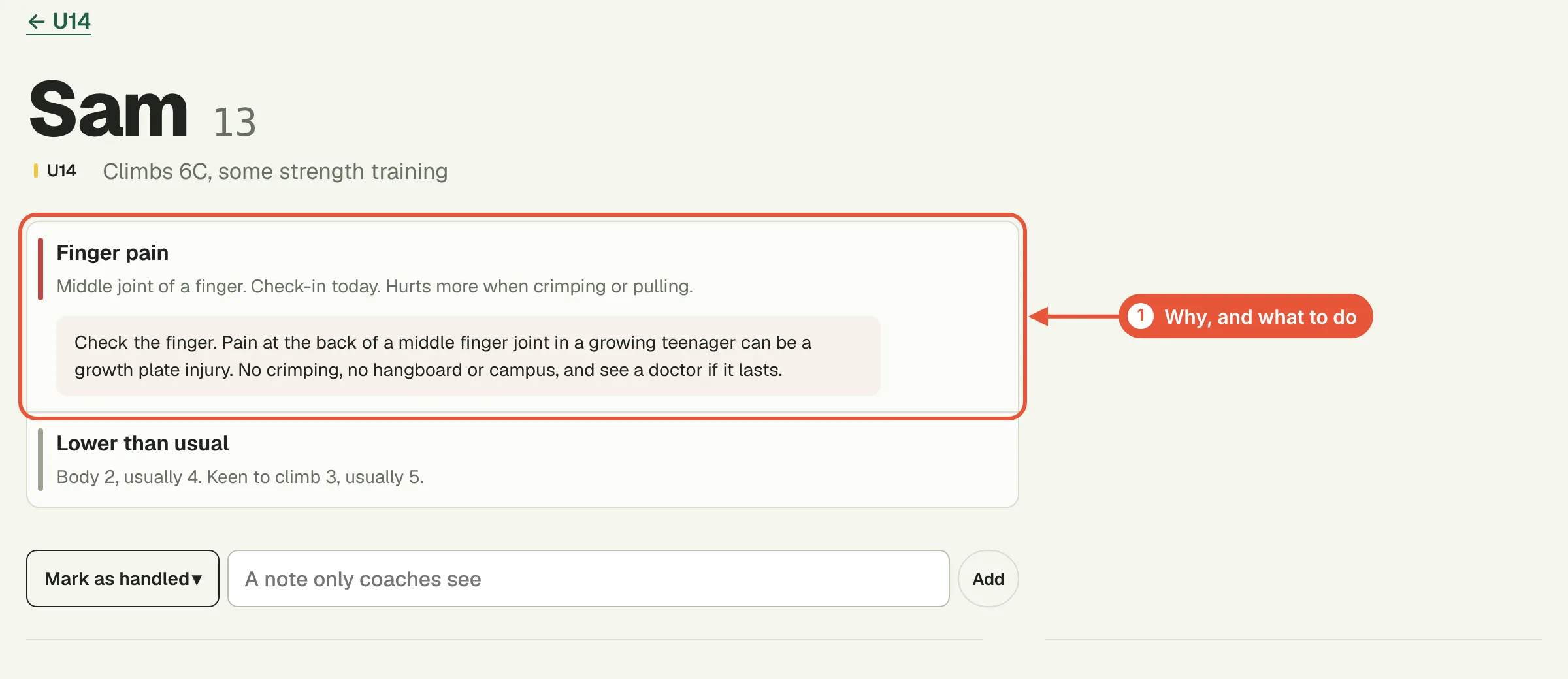
Young climbers are different
Slow-onset pain at a middle finger joint in a growing teenager can be a growth plate stress fracture, not a pulley. That needs a doctor and usually weeks off climbing. Don't plan a return for a young climber without a clinician's clearance. Planning a youth team's season has more.
Questions
Who decides when the climber can crimp again?
The physio or doctor treating the finger. The coach's job is to keep the plan inside what they allow and to report back what the climber did and how the finger felt.
Should the climber stop climbing completely?
That depends on the injury and the clinician's advice. Many finger injuries allow easy climbing on big holds early on. A growth plate injury in a teenager usually means weeks off climbing, so never guess with young climbers.
How do I know if the finger is getting worse?
Sharper pain, swelling, pain that lasts into the next day or pain at rest are all reasons to go back a step and tell the physio. A daily check-in that asks where it hurts makes a trend visible.
Can the app plan the return for me?
No. The coach area has no generator and gives no medical advice. You write the plan with the physio's limits, and it shows the climber's logged sessions and check-ins so you both see how it's going.
Coach your first 5 climbers free
Write each climber's plan, see what they log and read their check-ins before training. Paid plans start at €10 a month for up to 25 climbers.
Free for up to 5 climbers