
How to plan a youth climbing team's season

Short answer
Plan the season backwards from the first competition or the end of term. Start with lots of easy climbing, movement and general strength, then add intensity and comp practice in the last month. Keep growing climbers off the campus board (the BMC and UIAA advise none under 18) and away from intensive finger training under 16. Give at least one day off a week, measure height every three months, and treat finger pain at a middle finger joint as a reason to stop and see a doctor.
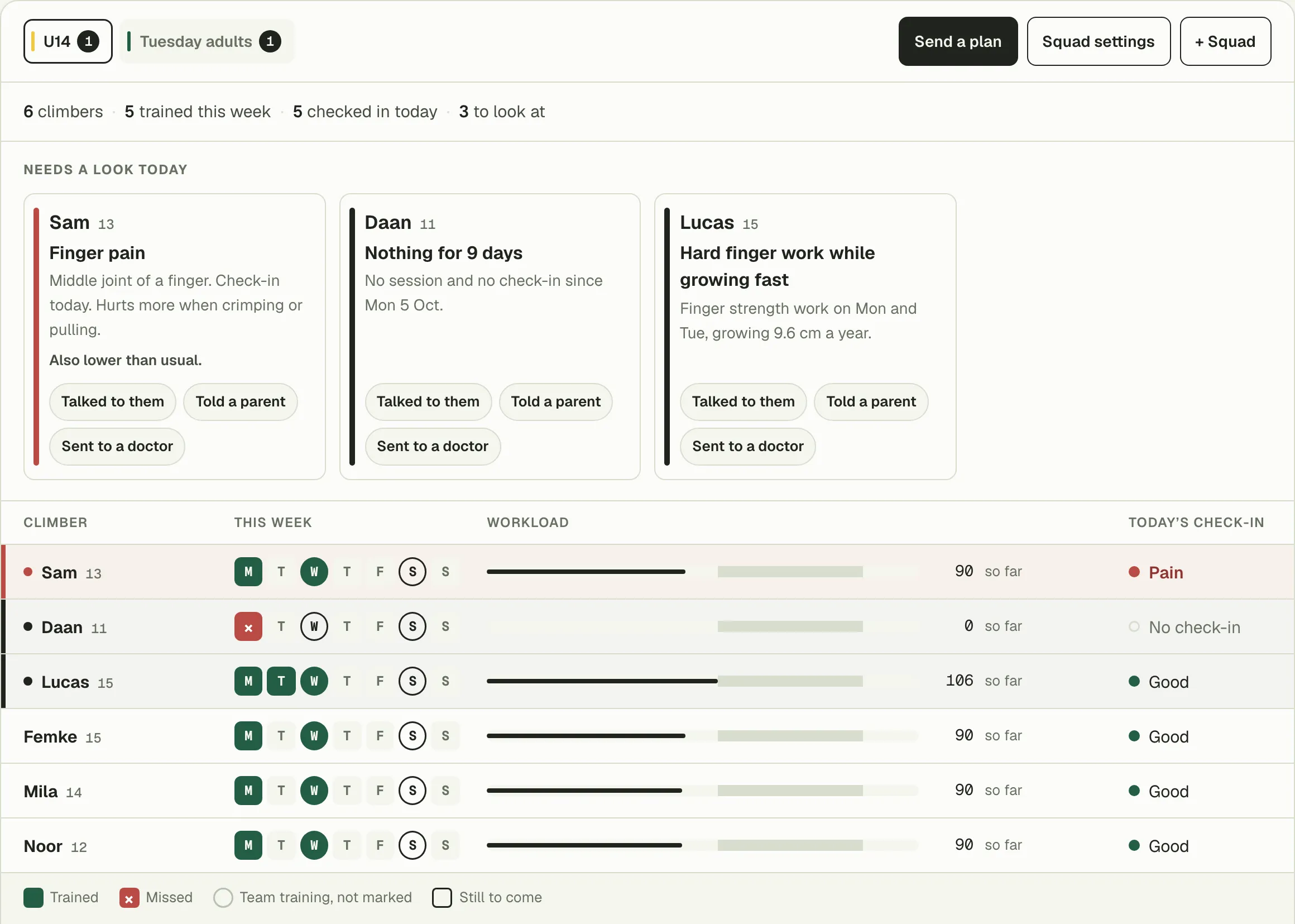
Coaching climbers? The coach area is free for up to 5 climbers: their plans, what they log and who has a sore finger, in one place.
See the coach areaWork back from the dates
A youth season has fixed points: the first competition, school holidays, the end of term. Put them in first and plan backwards.
- Base, most of the season. Lots of easy and moderate climbing, movement and technique on many wall angles, general strength with bodyweight, and games. This is where young climbers improve fastest.
- Build, four to six weeks. More time on harder boulders and routes, fewer easy ones.
- Comp prep, the last month. Comp formats, observation time, reading problems quickly, and rest before the event.
- A break. A few weeks a year off climbing, or at least off training, after the main event.
Rules for growing fingers
The growth plates in the middle finger joints are the weak point in teenage climbers, most often between 13 and 15 and during the growth spurt. The advice that comes up in every guideline:
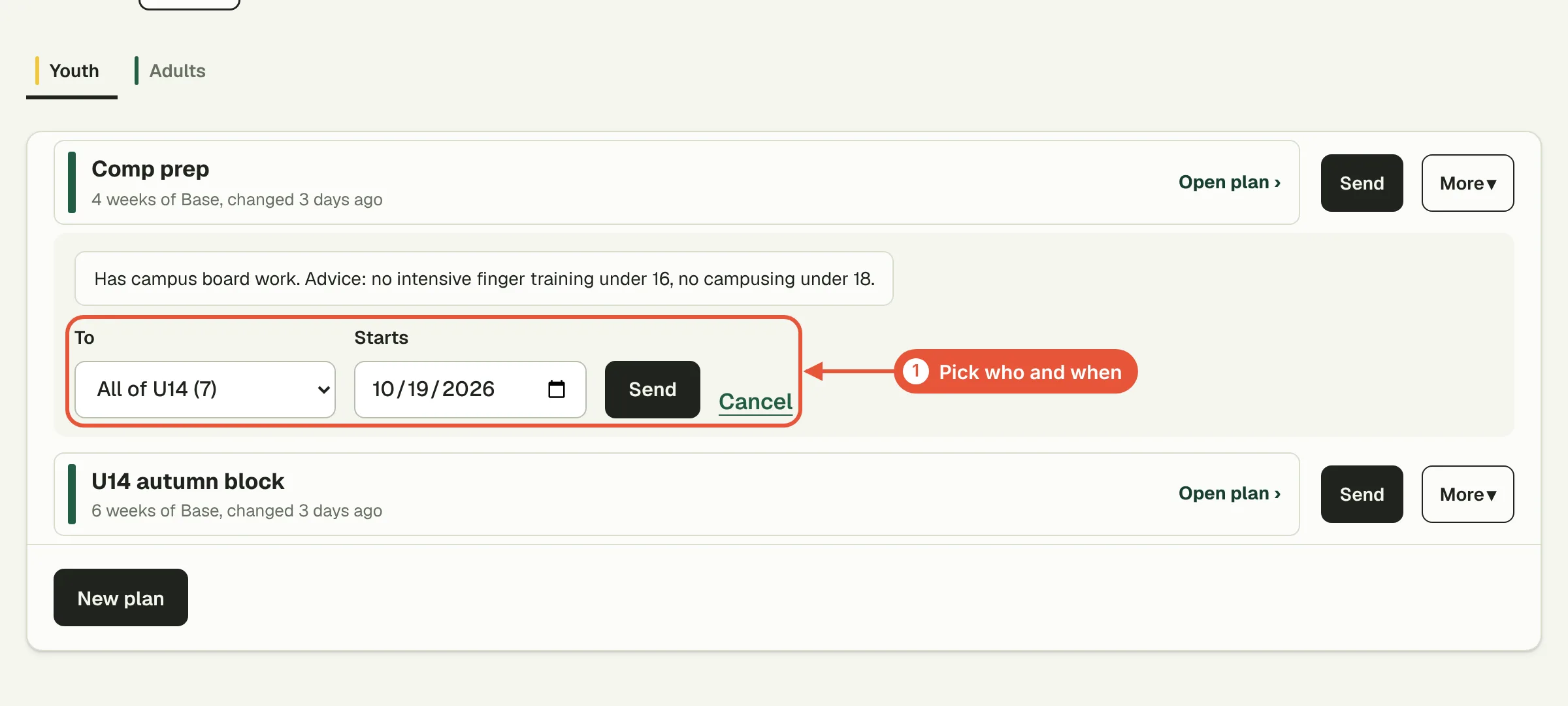
- No campusing, feet-off or dynamic, under 18 (the BMC with the UIAA Medical Commission).
- No intensive finger strength training under 16 (Morrison and Schöffl's 2007 review). There's no agreed hangboard age beyond that.
- Less full crimping on small holds for climbers who are growing fast.
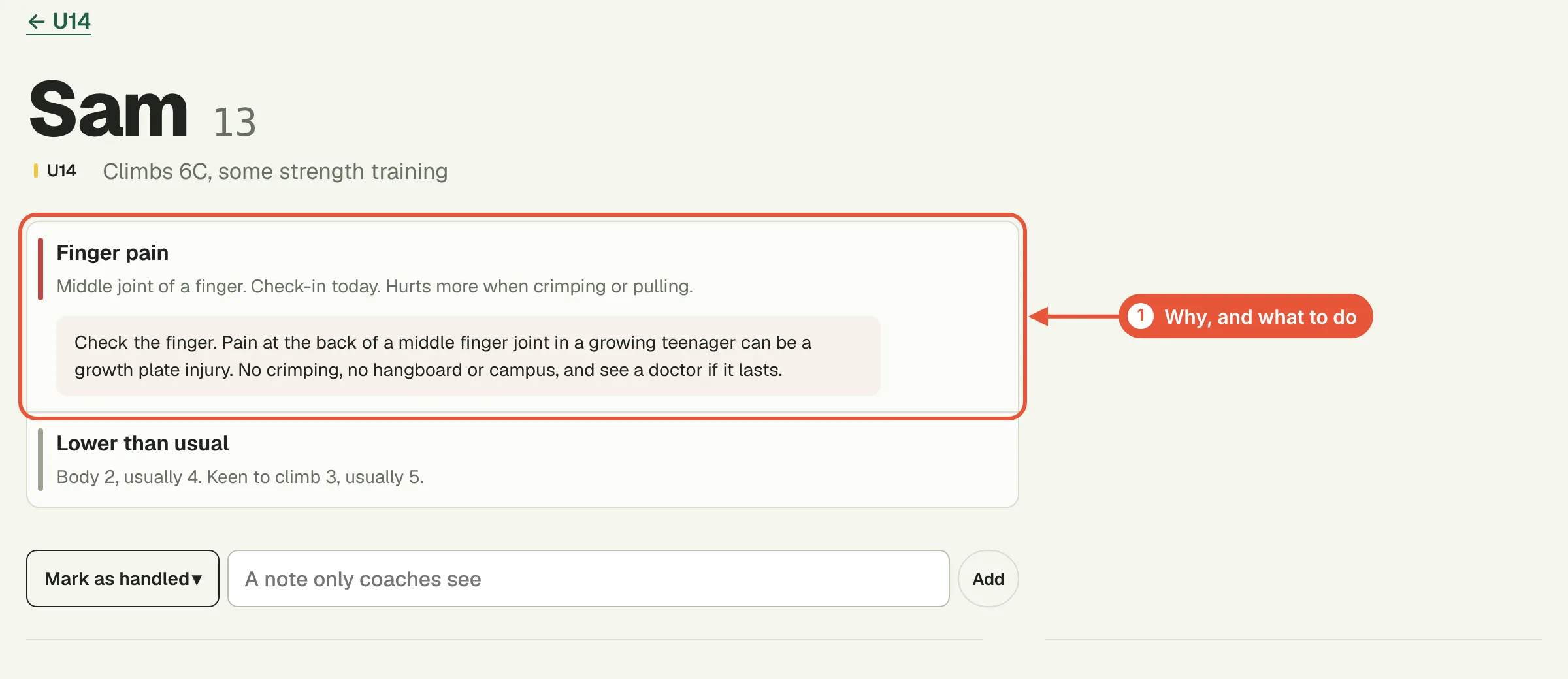
- Pain at a middle finger joint means stop. Slow-onset pain on the back of the joint nearest the hand, after training, can be a growth plate stress fracture. No crimping, no hangboard or campus, and see a doctor if it lasts. Most of these injuries are found late.
Measure growth
Measure standing height every three months, the same way each time: shoes off, back against a wall, in the morning if you can. A single reading tells you little. Two or three over six months show who is in a growth spurt, and that's when to go easier on finger loading and big jumps in training.
Keep the hours sensible
Youth sport medicine gives a few rules of thumb, all from sport in general rather than climbing:
- no more organised hours a week than their age in years;
- one or two days off a week (the guidelines differ);
- a few months a year off their main sport;
- 8.5 to 9.5 hours of sleep for teenagers.
Ask what else they do. A climber in your squad twice a week may also train at another club, play football and hangboard at home.
Hear about problems before the session
A five-question check-in before training (pain, sleep, body, head, how keen they are) takes a few seconds and catches a sore finger before warm-up. What to ask before training has the questions and how to read them.
Parents
For climbers under 16, agree with parents what you track and why, and get their consent. Share the finger pain rule with them too: they see their child's hands more often than you do.
Questions
At what age can young climbers use a hangboard?
There's no official age. The best-cited advice, from a 2007 review by Morrison and Schöffl, is no intensive finger strength training under 16. Many coaches use light hangs from the early teens. Nobody has tested either in a trial.
Why no campus board under 18?
The BMC, with the UIAA Medical Commission, advises that climbers under 18 don't campus feet-off or dynamically, because of growth plate injuries in the fingers.
How many hours a week should a young climber train?
A common rule from youth sport medicine is no more organised hours a week than their age in years, with at least one day off a week and a few months a year off their main sport. Count every club, sport and home session, not only yours.
Do I need parents' consent to track a child's training?
In the Netherlands, yes for under-16s, and training load and injuries count as health data. In the Blok Sessions coach area a parent says yes by email before a coach sees anything of a climber under 16.
Coach your first 5 climbers free
Write each climber's plan, see what they log and read their check-ins before training. Paid plans start at €10 a month for up to 25 climbers.
Free for up to 5 climbers